

Extra Virgin Olive Oil Production Stages
From January to September, olive trees undergo several cultivation operations: winter pruning, periodic soil cultivation, organic fertilisation and summer irrigation, all accompanied by constant monitoring of the plants to prevent attacks by pests that could compromise the entire crop.
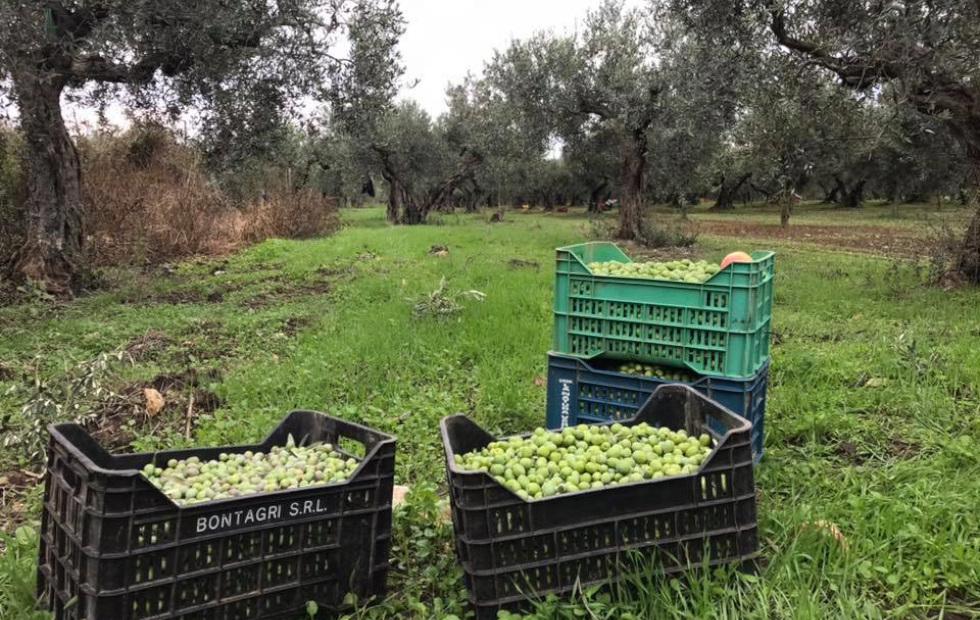
During October and November, the olives, once they have reached the right degree of ripeness, are harvested exclusively by hand, following a centuries-old tradition, and placed in perforated crates that allow proper ventilation until they are transferred to the olive mill.
Processing the olives is crucial to obtaining a high-quality olive oil. The process begins with crushing, when the olives are broken down by mechanical hammer crushers. This is followed by malaxation, during which the olive paste is mixed at a constant, controlled temperature that must never exceed 27°C. This is why the process is known as "cold extraction". Finally, the oil is extracted, producing an extra virgin olive oil with high density, an intense green colour and distinctive aromas and flavours.
The oil is then naturally decanted or filtered, stored in stainless-steel tanks under a nitrogen blanket and kept at a constant temperature, in order to ensure optimal storage conditions until it is packaged.
