

How to Taste Olive Oil
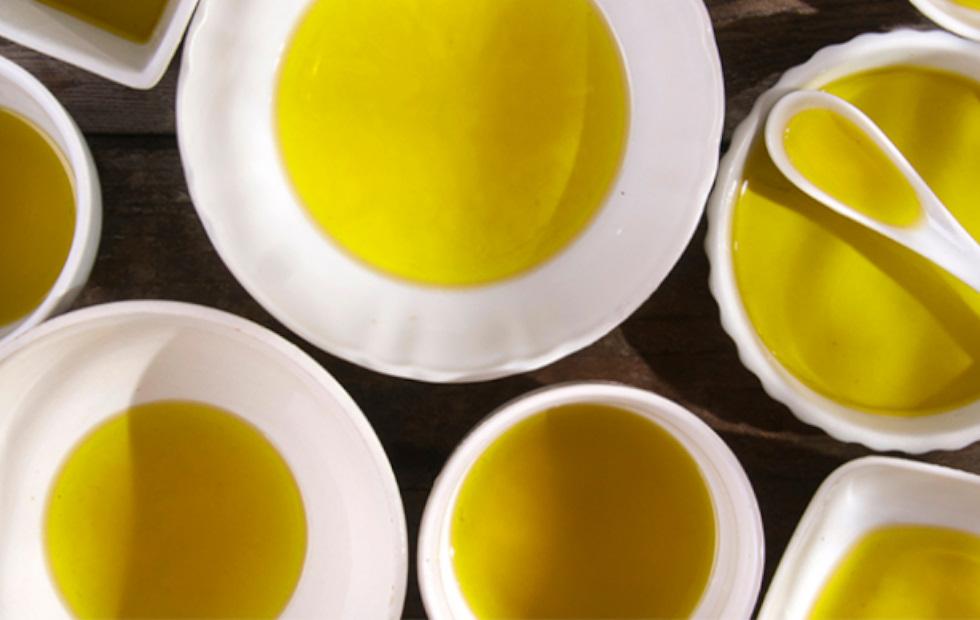
To determine the sensory profile of an olive oil, the IOC (International Olive Council) has established an official Panel Test method (to learn what it is, read the dedicated article on our blog).
Each assessor, seated in an individual tasting booth, receives the oil samples to be evaluated, a profile sheet to complete, a dark-coloured tasting glass (usually cobalt blue or red) so that the colour of the oil does not influence the assessment, since colour is not a quality parameter, as well as apple or sparkling water and a spittoon.
After pouring a small amount of oil into the glass, the taster covers the top with one hand and warms the bottom with the other to help release the aromas. The glass is then uncovered and the oil is smelled carefully (olfactory phase).
A small sip of oil is then tasted and distributed throughout the mouth so that all the receptors are involved. The taster then performs "stripping", a series of short inhalations through the mouth that helps volatile aromatic compounds reach the olfactory receptors through the retronasal route (taste-olfactory phase).
Finally, to assess positive attributes such as bitterness and pungency, part of the oil may be swallowed, while the remainder is expelled into the spittoon.
